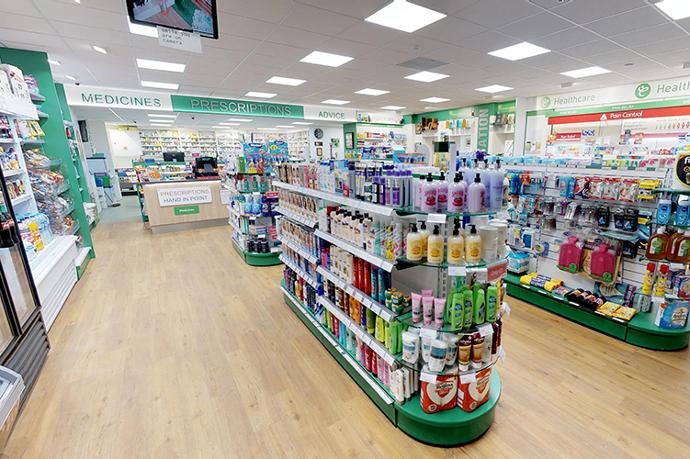
Pharmacies and healthcare formats have a very particular kind of pressure.
Every second counts at the counter. Every mistake carries risk. Space is tight, teams are stretched, regulations evolve, and yet many dispensaries still rely on generic shelving or low‑quality drawers that were never really designed for the job.
Over 25 years in retail fixtures, I’ve seen the same pattern repeat: when storage is slow, awkward and inflexible, everything else suffers – picking times, accuracy, staff stress and the customer experience at the counter.
That’s exactly why we designed D25 the way we did.
The real problems inside a typical dispensary
Walk behind the counter or into the back room of many pharmacies and you’ll spot the same issues:
Slow picking
Drawers that don’t slide properly, catch halfway, or require two hands to operate. Over a full shift, that friction adds minutes and fatigue to every dispenser’s day.Inflexible layouts
Storage that can’t be reconfigured when ranges, pack sizes or prescription volumes change. Pharmacies end up working around the furniture instead of the furniture serving the workflow.Low‑quality drawer systems
Units that feel flimsy, wobble when pulled out, or don’t like being loaded heavily. Staff lose confidence and start avoiding using them fully.Hard‑to-keep-tidy storage
Shallow shelves and generic cupboards where packs are double‑stacked, lost at the back, or misfiled because there’s no clear segmentation.
None of this is about pharmacists doing a bad job. It’s about the tools they’ve been given.
Why D25 was built the way it is
When we set out to design D25, we didn’t start from a regulations textbook. We started from the criticisms pharmacists and installers kept giving us about other systems:
- Drawers that were not high quality and not easy to operate.
- Storage that was not adaptable – impossible to tweak when the real world changed.
- Installations that took too long, causing disruption and extra labour.
So we built D25 around three priorities:
Smooth, solid operation
- Drawers built for daily, intensive use – not occasional opening.
- Runners and mechanisms chosen so drawers can be opened and closed quickly and confidently, even when fully loaded.
Real flexibility for the future
- Interiors that can be re‑segmented and adjusted as ranges, SKUs and pack sizes evolve.
- Modules that can be combined in different ways as the dispensary grows or changes.
Fast, predictable installation
- A modular structure that trained teams can fit quickly and consistently across an estate.
- Less time on site, less disruption, and lower fitting costs.
We’re honest about our role: we are not regulation specialists. What we are very good at is listening to what happens on site, understanding where other fixtures are criticised, and then engineering systems that solve those practical problems.
Trusted by major UK pharmacy chains
Good design in this space isn’t theoretical; it either wins the confidence of real chains or it doesn’t.
Two examples stand out:
A major UK pharmacy chain with 500+ stores adopted D25 wholeheartedly. They chose it because of:
- Its quality – robust enough for constant use
- Its flexibility – easy to adjust and configure to different stores
- Its competitiveness – the right balance of performance and cost
- Its speed of installation – important when you’re rolling out to hundreds of sites
Another UK‑wide pharmacy group with around 730 pharmacies made the same decision. They now use D25 on every new project – no looking back. For them, the combination of consistency, quality and ease of fit became a standard they didn’t want to compromise on.
In both cases, D25 moved from “an option” to “the standard”, because it worked for pharmacists, installers and property teams simultaneously.
What “pharmacy‑ready” fixtures really mean
Independent of the specific regulations, effective pharmacy fixtures need to support three things:
Speed
- Fast, smooth drawer operation
- Logical, visible organisation of stock
- Shorter travel paths between key areas
Accuracy
- Clear segmentation and labelling to reduce mis‑picks
- Storage that keeps packs visible, secure and in the right orientation
- Layouts that match real workflows, not just catalogue pictures
Security and professionalism
- Solid units that staff trust when storing high‑value or sensitive products
- A clean, modern look that supports confidence from patients and inspectors
- The ability to present OTC and front‑of‑store health ranges in a clear, responsible way
D25 and our related pharmacy modules are designed around those realities. The regulations will continue to evolve, but the need for fast, accurate, secure storage won’t.
How CAEM adds value in healthcare environments
Compared with general shopfitters, what we bring to pharmacy and healthcare is not a textbook of legislation; it’s a lot of experience of what actually fails in practice:
- We know the criticisms pharmacists have of poor drawers and cupboards.
- We understand how installers struggle when systems are over‑complicated or under‑engineered.
- We’ve seen how tough it is to run a busy dispensary out of generic retail fixtures.
So we design:
- Drawer systems that stand up to constant use, day in, day out
- Modular solutions that can be installed quickly and adapted over time
- Fixtures that help pharmacists do their job with less frustration and less risk
And when we sit down with a pharmacy client, the conversation is simple:
- What slows you down today?
- Where do mistakes or misfiles creep in?
- Which parts of your current storage do staff actively avoid using?
- How might your volume and mix change in the next five years?
From there, we propose practical, engineered answers – not abstract concepts.
Moving beyond generic shelving in healthcare
If your dispensary feels slow, cluttered or inflexible, it’s rarely a people problem. It’s a fixtures problem.
The experience of major UK chains shows that moving from generic shelving to a proper pharmacy storage solution – like D25 and its companion systems – can:
- Speed up picking and checking
- Reduce errors and rework
- Make staff workloads more manageable
- Future‑proof the space for changes in volume, product mix and services
You don’t need a perfect regulation manual to start improving your pharmacy environment. You need fixtures that respect the reality of the work and a partner who understands where other systems fall short.
That’s the space CAEM has chosen to own.