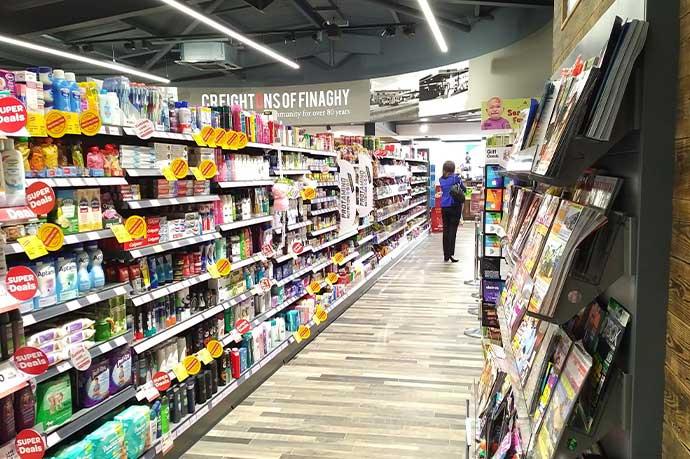
Interview with Andy Magrini, Managing Director and Owner of CAEM
With more than 25 years’ experience in retail fixtures and manufacturing, Andrea (“Andy”) Magrini has lived every corner of the business – from factory layouts and machine investments to store formats, product development and P&L. Born into the family company, he has led CAEM’s evolution from a traditional shelving manufacturer into a UK‑based, design‑led partner for retailers across food, pharmacy, DIY, homeware and value.
As Managing Director and owner, Andy keeps a deliberately hands‑on approach: he works across commercials, sales, marketing, product design, manufacturing engineering, finance and cash flow, and he stays close to the day‑to‑day challenges and innovations of each department. In this interview, we explore his journey, how CAEM has changed under his leadership, and how he sees the future of retail and fixtures in the UK.
Personal Background
Q: Andy, could you introduce yourself? Who are you, what did you study, and what does your family life, hobbies and passions look like outside of CAEM?
I was born in Italy and I literally grew up breathing the family business. Shelving, steel and retail were part of everyday life from a very young age, so it was always natural for me to be involved.
I studied Business Administration (Economia Aziendale) at the University of Pisa, and then in 1999 I joined the family business in the UK, at CAEM UK in Stafford. In 2000 I moved to CAEM Italy and started a major reorganisation of the company. That journey culminated in 2008 with the construction of a new state-of-the-art 140,000 sq ft factory in Subbiano. In those years we expanded CAEM from a pure shelving manufacturer into a partner for customised retail solutions, and I travelled extensively, building long-term partnerships with retailers and shopfitters around the world.
In the meantime I got married and my wife and I now have three boys, which keeps life outside work very active.
In 2015 I moved back to the UK to manage the business here. Since then, CAEM UK has grown significantly: we refurbished and expanded our 77,000 sq ft factory, invested heavily in manufacturing and design, and that all translates into a higher level of service and responsiveness for UK retailers.
Q: How many years have you been working in CAEM, and how did you first join the business?
I always wanted to join the family business. Officially, I started in 1999 at CAEM UK in Stafford. After that first year, in 2000 I moved to Italy to work inside CAEM’s original operation, and then in 2015 I moved to the UK for good to take over the management of CAEM UK.
So depending on how you count it, I’ve been working in CAEM continuously for over two decades – first on the UK side, then in Italy restructuring and expanding the group, and now back in the UK leading the business.
Q: What did your career look like before CAEM? Any experiences that were particularly important for the way you lead today?
My real career has effectively been inside CAEM. Very early on, around 2000, I took on the challenge of transforming CAEM Italy from a more traditional factory into a more structured, modern business. That meant:
- Strengthening design and engineering
- Modernising manufacturing and machinery
- Deepening our understanding of retailers and partners globally
- Travelling a lot to build relationships and plan strategic investments
In 2015, when I moved to the UK, I applied the same mindset to CAEM UK: reset the business to be more efficient, more structured and more focused on delivering value to retailers. Since then we’ve expanded manufacturing, design and services significantly.
Those experiences – restructuring, investing, and working closely with clients in many countries – have shaped the way I lead today: very hands-on, very data-driven, but always grounded in real store reality.
Q: How has your role evolved inside CAEM over the years, and what is your role today as Managing Director?
When I started, my role was very operational. I was involved in a bit of everything: production issues, design details, commercial discussions, finance – wherever there was a gap, I stepped in.
Over time, as we built a stronger team around me in both Italy and the UK, my role evolved. Today, as Managing Director, I still keep a very hands-on approach, but my main focus is on:
- Setting the strategic direction of the company
- Deciding where to invest in manufacturing, technology and people
- Ensuring that design, engineering, sales and operations are all aligned around one goal: delivering long-term value to our retail clients
I haven’t stepped away from the detail – I still get involved when projects are challenging or important – but more of my time now is spent making sure CAEM is moving in the right direction as a whole.
Day-to-day work and colleagues
Q: If you had to explain it simply, which areas of the company do you work in, and what do you actually do on a typical day?
The most crucial part of my job is setting the strategic direction of the company: deciding where to invest so that we can consistently surpass our clients’ expectations and grow the business in a healthy way.
Day to day, that translates into a very hands-on role across almost every area of CAEM:
- I get involved in the more challenging or larger enquiries and projects, the ones where the stakes are higher or the solutions are less obvious.
- I work across commercials, sales and marketing, product design, manufacturing engineering and machinery, and of course finance – profitability, balance sheet, investments and cash flow.
- We have a deliberately flat organisation: my door is open, and anyone can come in at any time to discuss an issue, an idea or a problem they’re wrestling with.
Over 25+ years I’ve become a genuine expert in shelving and modular fixtures, and I understand the manufacturing and supply chain side as deeply as the commercial and financial side. I enjoy the P&L and balance sheet as much as I enjoy a good fixture detail.
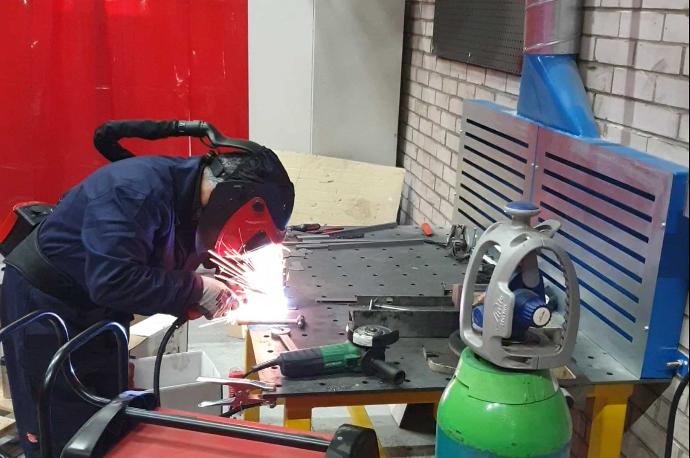
Cash flow is king, and it’s monitored regularly, but there is one thing I put even above the numbers: health and safety. I like to say that my colleagues should go home each day a bit richer in experience, a bit more grown, definitely tired – but physically unchanged from when they arrived. No injuries whatsoever. That’s non‑negotiable.
Q: Which colleagues and teams do you work most closely with?
I work most closely with finance, product development, sales and manufacturing.
The team in all these areas is very experienced and deeply devoted to the business. They don’t normally need me to do their job – they respect my role as MD, but they are fully capable of delivering outstanding value to clients on their own.
Unless a crucial project or enquiry needs an extra pair of eyes, they just get on with it. In fact, it’s often me knocking on their doors, asking what’s going on and how I can help, rather than the other way round.
Q: Can you share one or two “behind-the-scenes” stories about working at CAEM with these colleagues – the kind of everyday things that show the culture?
One of my favourite moments every year is our “employee of the year” prize. Every colleague votes and adds a comment about the person they’re voting for. When I present it, I always read out the comments first and only then say the name.
What I love is how often the winner genuinely has no idea it’s them – even while hearing all those positive comments. That tells you a lot about our culture: people focus on doing a great job together, not on trying to shine above others. There’s no politics, just a strong sense of team effort. And sometimes people don’t realise how crucial and outstanding they’ve been until they hear it from their peers.
Another thing I enjoy is popping into meetings uninvited. A few years ago, when I walked into a room, everything became a bit formal and people waited for my approval. Now I walk in, say hello, and they just carry on. They don’t stop to ask for permission; they work through the agenda, discuss options, make decisions. The outcomes I hear are exactly the kind of value I’d expect for our clients – and they’ve got there without me needing to lead every discussion. That’s very satisfying.
I also enjoy random walks through the factory: saying good morning, asking how people are, having quick chats. Sometimes I’ll throw in a friendly challenge with a straight face – the team knows me well enough to recognise the joke behind it. CAEM is genuinely enjoyable to work in: the team is well bonded, and everyone understands that everything we do is ultimately about delivering value to retailers.
Q: What is one object on your desk or in your work bag that you’re particularly attached to, and what does it represent for you in CAEM?
On my desk I keep a model of a sailing yacht. It reminds me of amazing family time on the water, which is ultimately why I put so much effort into the business.
For me, that model is a small daily reminder of balance: we work hard, we build and grow CAEM, but the real purpose is to create something solid and meaningful that supports the people and the lives we care about outside of work.
Evolution of CAEM and your impact
Q: How has CAEM evolved since you started working here – in size, markets, products, and the way we work?
If you look at CAEM today compared with 2015, the headcount is actually quite similar – but the business and the market around us have changed dramatically.
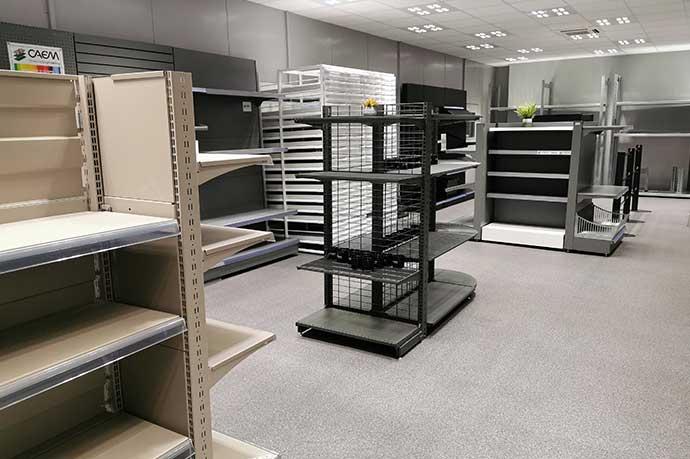
The classic “large box” shops that just needed long runs of straight shelving are fewer. Retail has moved towards more complex formats, smaller footprints, more services, more pharmacy and health, more formats that need real design and engineering, not just metal.
We didn’t wait for that change to happen to us – we evolved proactively:
- We rationalised our offer around a core of four shelving systems held in stock, backed by a solid, resilient supply chain and manufacturing base.
- We invested in a fully automatic powder coating system, so we can provide almost any colour in volume and support a truly flexible, high‑output manufacturing operation.
- On top of that, we built a design service that focuses on clients’ special demands. This is now where a lot of the business is focused: tailored solutions for UK retailers across all sectors. We listen, we design a solution, we manufacture it – and we can do that repeatedly and at scale.
So CAEM has shifted from being “just” a shelving supplier to being a UK‑based design and manufacturing partner for tailored retail solutions, with a very strong technical and industrial backbone.
Q: In your own words, how does your personal commitment translate into value for our clients – both directly and indirectly?
My personal commitment is very simple: if I put my face on a promise, it will happen. And I expect – and see – the same attitude across the team.
In practice, that means:
- Hard work: I work full on and long hours, and I’m very close to the detail in all departments, not just the high‑level numbers.
- Plain, amicable communication: I’m very no‑nonsense. I talk plainly, get to the point, and don’t waste time – with clients and internally. We don’t really “sell” in the traditional way; we consult.
- Real expertise: After 25 years, I know what I’m talking about – shelving, modular fixtures, manufacturing, supply chain, finance. If something is not in our scope, I tell the client directly. Everyone at CAEM is encouraged to work this way: we consult the client honestly. If we can’t help by adding real value, we say so.
For clients, that translates into:
- Clear expectations and fewer surprises.
- Solutions that are engineered properly, not just agreed to win an order.
- A partner who takes responsibility when something needs fixing.
Q: Are you personally in direct contact with our clients? In which situations, and what do you usually talk about with them?
Yes. Larger and more demanding clients do engage with me, although not on a daily basis.
Typically, I get involved when:
- There is a major new format or large roll‑out being discussed.
- A client wants to talk at board or director level about risk, capex, supply chain or long‑term partnership.
- There is a complex challenge that cuts across design, manufacturing and commercial aspects.
Even if we don’t speak often, they know who I am and they have my direct contact details. There is total transparency and commitment: if they need me, they can reach me. That visibility and accessibility are important to me.
Q: In your opinion, why should a client choose to work with CAEM rather than with another fixture supplier?
Because with CAEM you get something that is genuinely rare in the UK market: a well‑established, financially solid, highly organised, design‑led manufacturer with full in‑house production.
To put it bluntly, the market is split between:
- A few large players who don’t manufacture, but play the game of spreading within one account to sell more and more kit sourced from various places; and
- A number of smaller operators who are less structured and will buy from different suppliers each time, without a strong industrial base or consistent technical standard.
CAEM is different:
- We design and manufacture our own systems in the UK.
- We provide a valuable design and engineering service, not just a catalogue.
- We have full in‑house manufacturing and a strong balance sheet.
- We’ve been around for decades and plan to be around for many more.
For larger roll‑outs, where lead time allows and volumes justify it, we can also leverage our 20‑year presence in the Far East. In those cases we still design the solution, control the engineering, and then use our established partners to manufacture to our standards. You still deal with CAEM, with full accountability and technical control.
In short: with CAEM you get full authenticity – one partner that designs, engineers, manufactures and stands behind the fixtures you’re investing in.
Products, services and technical value
Q: Which CAEM products or services do you personally find the most interesting or exciting?
What excites me most is our product development service.
We can build on our existing shelving systems or on a client’s existing estate, but the crucial part is that we also design displays and full shop‑format ideas from scratch. The goal is always the same: make the client unique, make them efficient, and beat the budget.
That means:
- Taking a sketch, a concept or even just a problem description
- Translating it into an engineered solution that fits their brand and operations
- Making sure it can be manufactured at scale and at the right cost
It’s where creativity, engineering and commercial reality all meet – and that’s the part of the business I find most stimulating.
Q: Which CAEM products or services do you think deliver the greatest value for our clients, and why?
Again, I would say product development combined with UK manufacturing.
Once we’ve properly probed the client – really understood what they’re trying to achieve – the whole process of design → prototype → pilot → production can be extremely fast:
- Design happens in the UK, close to the client and close to the factory.
- Prototypes can be built quickly and seen in person.
- Pilots can go into real stores and be refined.
- Full production can ramp up smoothly because the same team that designed it is also manufacturing it.
That integration is what delivers the greatest value: clients get tailored solutions, but with the speed and reliability of a well‑oiled industrial process.
Q: Can you give one or two detailed examples of products or services where you’ve seen that value very clearly in practice?
One strong example is a UK retailer with around 600 stores. We reworked their entire store format, and they have never looked back – it has been an immense success.
That programme involved:
- Integrating our shelving systems with wire display solutions
- Developing a special powder coating to express their brand properly
- Designing many bespoke displays for specific merchandise categories
- Extending the concept into a garden centre area, with appropriate weatherproofing and robustness
It wasn’t just “new shelves”; it was a full technical and visual language for their stores, built on a solid modular base.
Another example is an upmarket supermarket retailer in central London. There, the bar for refinement is very high. We revamped their entire fixture set‑up with:
- Finer design touches
- Very specific colours and finishes
- Category‑specific displays
The result was a level of refinement you’d expect in high‑end bespoke environments – but built on modular, repeatable CAEM systems that can be rolled out and maintained efficiently.
Q: Which CAEM products or services do you think are genuinely unique, or very rare, in our sector?
In the UK, a lot of manufacturing has faded away over the years. There are subcontractors out there, but they’re not deeply rooted in the authentic world of retail displays that have to work on real shelving systems.
I believe CAEM’s mix is genuinely unique:
- We are a true manufacturer, with our own engineering and factory.
- We specialise in retail fixtures and systems, not generic fabrication.
- We combine modular gondola systems, drawers, counters and specials with a serious product development capability.
That blend of in‑house manufacturing + deep retail fixture expertise + product development is very rare in this country.
Q: If a client is torn between a standard solution and a fully bespoke one, what are the three key factors you suggest they consider before deciding?
I usually bring it back to three points:
Functionality
- How will this fixture really work, day in and day out?
- Capex is much less impactful than opex in the long term. If a standard solution makes operations harder forever, the “saving” disappears quickly.
Sales
- How well will the merchandise be displayed?
- The fixture exists to sell. If a bespoke solution will significantly improve visibility, access and presentation, it can justify a higher initial cost.
Cost
- Standard will almost always be cheaper up front.
- The question is whether that cost difference is bigger or smaller than the operational and sales benefits of a tailored solution over the life of the fixture.
Once we look at those three together – functionality, sales impact, and total cost – the right answer usually becomes obvious.
Q: What is the most common technical problem or question that clients bring to you, and how do you usually explain the solution to them in simple terms?
The most common topic is compatibility – but that word hides two very different ideas:
Compatibility of merchandising and planograms
- “Can we use the same planograms as before?”
- “Will the new fixtures support our existing way of laying out the range?”
Interchangeability of components
- “Can we physically mix and match components from our old system with the new one?”
- “Can we re‑use uprights, shelves, brackets, etc.?”
I fully understand large retailers who have a lot of legacy fixtures they want to re‑use. It’s sensible to protect that investment.
However, it can also become a brake on evolution. A good example is C‑stores in the UK: many are tied to 50 mm pitch shelving. You almost never see that anywhere else in the world. They’re missing out on simple benefits – for example, the potential for an extra shelf per unit – because they lack the courage to move on from the past.
It’s very difficult to change a large estate, but sometimes clinging to absolute compatibility with historic kit means sacrificing future performance. My role is to explain those trade‑offs honestly and help them decide where compatibility is essential and where it is actually holding them back.
Q: Can you describe a situation where a client thought they needed “X”, but after talking with you ended up choosing “Y” because it was better for their business?
A typical case was a specific display for a large, bulky yet light product.
The client initially asked for essentially a close copy of what they already had on site, just with more metal and less timber. On paper, that sounded straightforward.
We challenged that brief and reinterpreted the display from scratch:
- We developed a solution that used fewer components.
- It was significantly more cost‑competitive to manufacture and install.
- Most importantly, it made the product stand out much more clearly.
The end result was not a heavier version of the old idea, but a new display that did a better job commercially and operationally.
Things like this happen quite often: clients come with “X” in mind, because it’s what they’ve seen before, and through discussion we arrive at “Y”, which fits their business far better.
Q: If you had to describe the “personality” of a CAEM shelving system compared to the competition, which 3–5 adjectives would you use?
I’d say:
- Flexible – able to support different formats, categories and changes over time.
- Adaptable – easy to re‑configure, extend and tailor without starting again.
- Robust – engineered to cope with real store life, not just test conditions.
Those three words – flexible, adaptable, robust – sum up how we try to design every system and every special: not just to look good on day one, but to keep working, evolving and earning its place in the store for many years.
Projects: difficulty, satisfaction, transformation
Q: In your life at CAEM, what has been the most difficult project you’ve worked on (it could be a fixture, a store format, a service, or even an internal software/tool)? What made it so challenging?
One of the most difficult projects I’ve worked on was actually not a fixture at all, but a piece of infrastructure behind the scenes: a fixtures consolidation service and the software behind it for a large client.
When I arrived, the service was already in place, but it had serious issues:
- It wasn’t efficiently organised.
- It was too costly to run.
- It was not properly integrated into our ERP system.
At the same time, we couldn’t just stop and start again – we had to keep delivering the service while reshaping how it worked. That is always the hardest combination: fixing the engine while the plane is flying.
Over time, we:
- Restructured our internal processes around the service.
- Re‑worked and integrated the software with our ERP.
- Increased service levels, improved reporting and made invoicing much clearer.
It was challenging because it touched everything at once: IT, operations, finance and client expectations. But it forced us to become much more professional and scalable in that area.
Q: How did your effort – and that of your colleagues – find the right solution in that project?
The key to finding the right solution was a combination of:
- Deep product knowledge – understanding exactly what we were consolidating and shipping.
- A clear view of our internal processes – mapping how information and goods actually flowed, not how we thought they flowed.
- A strong understanding of the IT systems – knowing how the ERP, the consolidation software and our reporting needed to talk to each other.
My role was to keep those three perspectives connected, and the team did a great job of challenging assumptions, rebuilding processes and making the system robust enough to support the client properly.
Q: Which project has given you the greatest satisfaction, and why?
One of the most satisfying projects was a new store format for a large retail chain.
It was extremely challenging because:
- It involved a lot of changes across the store.
- There were many different types of products and displays to integrate.
- We essentially went through a full redesign of the fixture environment.
We went right down to the details – even to the level of adjusting the granulometry of the powder coating to get the finish exactly right for the look and durability the client needed.
What gives me the greatest satisfaction is this:
- Throughout the transformation, service to the client remained unchanged.
- They did not experience delays or stock breaks.
- And at the end, they found their new shop format at the forefront of the UK retail environment.
Delivering that level of change while keeping day‑to‑day service stable is not easy. Seeing it work so well, both operationally and commercially, was very rewarding.
Q: Could you tell us about another project that you’re particularly proud of, with as many details as possible?
I’m very proud of how we transformed CAEM UK with FASTMAKE, our manufacturing unit for flexible, bespoke items and high‑volume throughput.
We started literally from scratch:
- I had done something similar in Italy, but it had taken over 15 years to build up.
- In the UK, we achieved the equivalent transformation in less than a year.
What made it special was:
- The team fully bought into it.
- They learned at an amazing pace.
- The whole thing happened almost organically through the drive of internal people and their desire to improve, grow and deliver – no ifs, no buts.
Today, FASTMAKE is almost taken for granted by the team – it feels “normal”. I often have to remind them that achieving what we did in 12 months would be unthinkable for many companies even over many years.
It changed not just our capacity, but our identity: from a standard manufacturer to a flexible, rapid, bespoke‑capable operation.
Q: Can you share a project where there were problems with the client, and how those issues were resolved – including your own contribution to putting things right?
A good example is a large homeware retailer who was experiencing:
- Part deliveries
- Picking errors
- General frustration with accuracy and service
We didn’t just “tighten up” in one area. We went through the entire client set‑up, step by step:
- How we received their demand – often in the form of store layouts.
- How that information was entered into our systems.
- How the picking process worked in the warehouse.
- What checks were done before dispatch.
By systematically rebuilding that flow, today this client is experiencing 100% on time, first time, in full.
My contribution was mainly to:
- Coordinate the overall effort.
- Keep reminding everyone how crucial service is for the client and for our reputation.
But honestly, the team did the heavy lifting: they came together, challenged each other’s departments, and from that healthy tension a much better end‑to‑end process emerged.
Q: Looking back, which project do you think was truly “transformational” for the client – something that really changed their business or their way of working?
I would say the most transformational “project” has been product development itself – the way we repositioned CAEM and, through that, changed how clients work with us.
For a long time, many clients perceived CAEM as “a warehouse of shelving systems”: a place to buy good gondolas and racking.
Over the last couple of years, we’ve deliberately repositioned ourselves as a partner for shop formats and display evolution:
- This pivot relies on FASTMAKE – our flexible manufacturing capability.
- And crucially on our design service – probing, sketching, engineering and prototyping around retailers’ ideas.
For clients, that has been transformational because:
- Instead of thinking “what can we buy from the CAEM catalogue?”, they now think “we have an idea – let’s call CAEM”.
- They get formats and fixtures that are tailored to them, not just to a generic standard.
- They can evolve their stores faster, with a partner who understands both the creative and industrial sides.
That shift – from supplier to technical design and manufacturing partner – is probably the most important change I’ve seen, both for us and for the retailers we work with.
Crises, urgency and problem-solving
Q: Can you tell us about an episode that put you under the greatest professional pressure – whether with a client, a supplier or internally – and how you resolved it?
One of the most intense situations I’ve faced was with a major client who, before I arrived, had been experiencing a clear lack of attention from our side. They felt taken for granted and were actively considering alternatives.
When I stepped in, I had to regain their trust on two levels:
- Trust in CAEM as a company
- Trust in me personally as the owner, and in the team around me
We didn’t fix it with one big presentation. Over several months, we:
- Attended multiple meetings at different levels of their organisation
- Brought real ideas to the table – not just “we’ll do better”, but concrete proposals for formats, fixtures and improvements
- Showed, through behaviour and delivery, that we were fully committed to their business
Gradually, they started to see how much value there was to tap into if they worked with us properly. Their mood shifted from sceptical to engaged.
In the end, they effectively “married” us for the long term. They understood and perceived what CAEM truly is, throughout the whole organisation – not just on a PowerPoint slide. Today, several members of our team engage with them directly, and they speak very highly of us.
For me, that episode was a reminder that recovering trust is possible, but only if you show up consistently, bring real value, and put your own face and reputation on the line.
Q: What really happens behind the scenes at CAEM when a client has an unexpected emergency or impossible deadline? Can you tell us about a time when the team did the “impossible” to meet a date?
When a genuine emergency hits, everyone goes on high alert – but the reason that works is because our “normal” way of working is robust and controlled.
Because the general system and flows are strong, because we’re not constantly firefighting, we actually have the headroom and clarity to respond to real crises. In businesses that are always in chaos, that becomes impossible – there’s no spare capacity, no calm, no structure to lean on.
A good example:
- A client was opening a pilot new format store.
- They had submitted an incorrect layout and only realised very late that key parts of the store needed to be changed.
- The directors were visiting the day after tomorrow. The store needed to look right by tomorrow night.
Under normal circumstances, that would be an impossible ask.
What happened at CAEM was:
- The team got together immediately – design, manufacturing, powder coating, logistics, installation.
- They established a clear, hour‑by‑hour plan:
- What needed to be made
- What needed to be powder coated
- How it would be picked and packed
- How it would be transported to site
- Who would fit it and when
Because our manufacturing, planning and stock systems are strong in everyday life, we could bend them hard for 24–48 hours without breaking them.
And it was done. The new elements were manufactured, coated, picked, packed, delivered and fitted in time. The store was ready for the directors’ visit, and the pilot format got the launch it deserved.
From the outside, it might look like a heroic, last‑minute save. From the inside, it’s the result of years of building a stable operation, so that when you really need to do the “impossible”, the whole organisation can lean in and make it happen.
Innovation, technology and ESG
Q: CAEM invests a lot in innovation – process, production, products, services. Which innovation, more or less recent, do you think has been the most crucial for our clients?
It’s difficult to pick just one, because in reality innovation only works when people and teams bond together to make it work. But a few stand out.
First, our new ERP system, which went live in just nine months, was a big one. It certainly didn’t happen without hiccups, but once it was in and stabilised, it made everyone inside CAEM significantly more efficient. Clients immediately benefited from:
- Better precision in orders and deliveries
- Clearer data and reporting
- Smoother communication between departments that touch their projects
Second, the entire FASTMAKE project was truly innovative. From:
- Planning the factory layout
- Choosing the right machinery
- Designing the flow for flexible yet high‑throughput production
…we essentially built a new way of manufacturing tailored fixtures at speed. That has changed what we can say “yes” to.
And then there is product innovation, which for us happens literally every day. Whenever we tailor solutions for clients, we are innovating:
- New fixtures
- New accessories
- New ways of combining systems
There are countless examples, some of which we show on the website. But we deliberately don’t publish a catalogue of “a thousand ideas”. Our approach is consultation‑focused:
- We don’t believe in one‑size‑fits‑all.
- Even two clients selling the same products will have very different requirements: store architecture, shelf stock depth, merchandising lines, visual style, brand positioning.
So instead of saying “here’s a list of everything we’ve ever built”, we listen first, then innovate specifically for that client. That mindset is, in my view, the most crucial innovation of all.
Q: Is there a specific technology, material or manufacturing choice we use that, in your opinion, makes a huge difference to product durability or performance, but that clients rarely notice?
A very clear example is our fully automated powder coating line.
Technically, it’s the best technology available today for this kind of product. In practice:
- Most clients don’t notice the difference at the beginning, because when products are new, coatings can all look quite similar.
- But our system allows for a much more durable finish:
- Consistent coverage on every corner, edge and angle
- Better penetration into complex areas like wire intersections
- Stronger resistance to chipping and corrosion
Where it really emerges is over the years. You can walk into two shops of the same age: one with fixtures coated on a basic line, one with ours. The CAEM shop simply looks newer and better maintained, even when the same amount of wear and tear has happened.
It’s one of those “invisible” technologies that quietly protects the client’s investment in fixtures.
Q: People talk a lot about “sustainability”. In practical terms, how do your work and our products help a store become more sustainable or “green”?
For me, sustainability starts with design and engineering decisions, not just labels.
Modular composition of displays
- We always propose modular structures where possible.
- That is eco‑friendly in manufacturing, because:
- It reduces waste (and what waste there is gets recycled).
- It makes delivery more efficient – denser packing, fewer journeys, lower CO₂.
- Modular products are also more durable, reusable and adaptable. Extending the life of a fixture is the first, most important sustainable action you can take.
Reducing plastics and packaging
- Internally we have worked hard to reduce plastic and unnecessary packaging across the board.
- In one case we did something quite unique and powerful:
- We designed bespoke stillages for a client’s products and logistics.
- That allowed us to eliminate several tonnes of cartons and plastic packaging over time.
- The client got safer, more efficient handling; the environment got less waste.
Re‑using and re‑finishing existing fixtures
- For some clients we consolidate their second‑hand shelving and fixtures, and give them a new life via re‑powder coating.
- This saves the CO₂ that would be emitted if we produced entirely new steel fixtures, and it protects the value of what they already own.
So sustainability, for us, is not a sticker we add at the end. It’s about how we design, pack, ship, install and re‑use fixtures over their whole life.
Q: Are there things that happen inside CAEM that benefit our clients (directly or indirectly) but that we don’t talk about enough publicly?
Yes, many – and they’re often small, continuous improvements rather than big headlines.
Across the company we constantly tweak processes to enhance reduce–reuse–recycle:
- It’s hard to mention just one, because they run through manufacturing, logistics, office practices and IT.
- A simple example is our use of pallet wrap:
- We deliberately reduced the thickness of the film we use.
- Our wrapping robots pre‑stretch the film to the right tension.
- The result is a solid, safe pallet using significantly less plastic.
Individually, these changes look minor. Collectively, they reduce waste, lower costs and improve efficiency for both us and our clients. We don’t shout about them enough, but they are part of why we can offer robust, competitive, reliable service.
Q: Which new skill or technology are you personally learning at the moment to serve clients better?
Right now I’m researching how to integrate AI, specifically large language models (LLMs), as a “knowledge assistant” inside CAEM.
The idea is not to replace people, but to:
- Help our project managers and designers spot unique challenges faster
- Flag situations that are outside the usual patterns and may need extra attention
- Suggest better questions to ask clients, based on what we’ve seen across hundreds of projects
LLMs are very powerful, but the real challenge is integrating them into the actual workflow in a way that is stable, safe and genuinely helpful. That means:
- Standardising how we capture knowledge and project data
- Defining where in the process AI can add value without causing confusion
- Training the team to use it as a support tool, not a crutch
It’s an ongoing learning curve, but if we get it right, it will make us even more responsive and insightful when we work on new formats and fixtures with our clients.
Market view and future of retail
Q: How do you see the world of retail changing over the next five years, and in what ways is CAEM already preparing its products and services for that change?
Omnichannel is no longer a theory, it’s the reality and the future. Stores will increasingly become beautiful, experience‑led showrooms:
- Places with a wide range of merchandise on display
- Where you can buy immediately
- Or order online, often from within the shop itself
The store becomes a physical touchpoint in a much bigger journey – discovery, service, fulfilment – not just a warehouse for products.
This “experience‑led” retail requires a lot of adaptation:
- Each sector will create experiences differently.
- A C‑store might adapt to offer more food for immediate consumption, coffee, seating, and services.
- Discount stores will need to evolve their offers and cost efficiencies, while also welcoming customers into shops that are pleasant, easy to navigate and comfortable to spend time in.
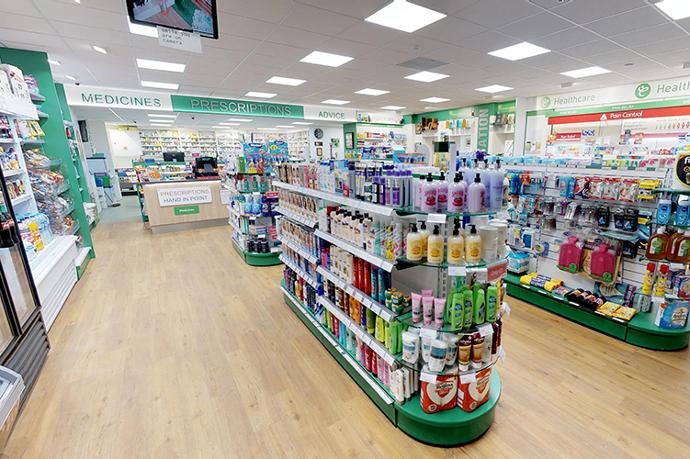
- Pharmacies and health formats will blend clinical efficiency with more open, reassuring environments.
CAEM is already preparing for this in very concrete ways:
- By developing tailored fixtures and formats that support omnichannel operations – from standard gondolas to Click & Collect, smart lockers, counters and back‑of‑house solutions.
- By investing in design and FASTMAKE manufacturing, so we can help retailers prototype and roll out new concepts quickly.
- By making our systems more flexible and modular, so stores can keep evolving without scrapping everything every few years.
In short, we’re positioning ourselves as the partner that helps retailers move from “shelves in a box” to experience‑driven, omnichannel environments – without losing efficiency or control of costs.
Q: When you walk into a “normal” store now, with your experience, what is the first thing you notice that most people don’t see?
The first thing I notice is whether the store feels alive and intentional, or blunt and generic.
When I walk into a shop and it’s just endless ivory runs of standard shelving, with no thought to colour, finishes, feature units or journeys, my feeling is that the shop is outdated. Sometimes that’s intentional – the retailer wants the customer to perceive that what they buy there is purely about low price.
But over the long run, attracting and keeping clients is never just about price. It’s also about the environment you offer:
- Why should people spend 30–45 minutes of their life in your shop?
- How does the space make them feel while they’re there?
- What happens when a competitor matches your prices but offers a nicer, easier, more enjoyable environment?
At that point, clients can and do shift.
From my perspective, CAEM is ready to support these transformations in a cost‑competitive, consultancy‑driven way:
- We don’t just sell you more of the same ivory shelving.
- We help you rethink the environment – colours, fixtures, features, back‑of‑house – so that your store feels current and compelling, not stuck in the past.
Wrap-up
Q: If you could give one piece of advice to a retailer who is about to start a store refit or new format project, what would it be?
Talk to a person – and a company – that will genuinely behave as a partner, not just a supplier.
Then take a hard look at the organisation behind that person:
- Is it swift and flat, so your case can spread and escalate quickly to the right people?
- Or is it a very large, rigid structure where your project will face friction every time it needs to move up a level?
After that, assess the fundamentals:
- The company’s financial strength and growth path.
- The services they truly control – especially design and production.
- And, even better, whether they control those by doing them in‑house, rather than outsourcing everything.
If you choose a partner with real in‑house capability, a healthy balance sheet and a culture of openness, you dramatically reduce the risk in your refit or new format project – and you increase the chances that it will actually deliver what you promised internally.
Q: Is there anything else you would like to say to our clients and partners that we haven’t covered yet?
I’d like to emphasise that CAEM is a long‑standing strength in retail display solutions in the UK.
Today we are uniquely positioned to:
- Build on proven shelving systems
- Add custom‑tailored solutions, both products and services
- And evolve, together with each retailer, their store environment to new levels of performance and experience
All of this is entirely controlled in‑house, within the UK:
- UK design
- UK project management
- UK manufacturing
That combination – heritage, financial solidity, in‑house capability and a very client‑focused, consultative approach – is what we offer to every retailer who chooses to work with us.