Most fixture conversations start with price, lead time and look. Very few start with carbon, waste or biodiversity.
Yet fixtures sit in stores for 7–15 years, span hundreds of sites, and involve thousands of tonnes of steel, packaging and transport. If you care about ESG in any serious way, you can’t ignore them.
At CAEM, we don’t pretend that a shelving system will save the planet. But we do take responsibility for the impact we create – from the way we design and manufacture, to what happens when a store is refitted, to how we handle what we can’t yet eliminate.
What we actually do today – not “green talk”
As an owner who lives in the numbers as much as in the factory, I’m only comfortable talking about actions we can measure and prove.
Today, those include:
Offsetting our Scope 1 and 2 emissions
We measure and offset our direct energy and company emissions – around 470 tonnes of CO₂ equivalent – rather than just talking in vague terms.Planting trees on UK soil
We’ve chosen to support tree‑planting locally, so the benefit is visible in the environment we operate in, not just as a certificate from somewhere far away.Supporting biodiversity on site
We keep bees on our site as part of a practical approach to biodiversity, not just as a marketing line.
Importantly, these are after the basics: reduce, reuse, recycle. They are not a licence to carry on as usual; they are what we do once we’ve already cut as much waste and inefficiency as we can.
Our ESG page goes into the detail, but the guiding idea is simple: first reduce what you consume and throw away, then deal responsibly with what remains.
Why modular steel beats timber on ESG (and economics)
One of the biggest levers we have is what we choose to make and how we choose to make it.
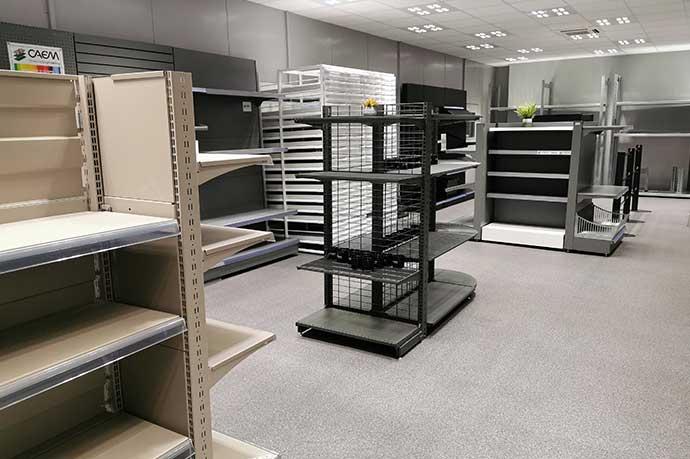
We deliberately design retail ambient solutions to be as modular and steel‑based as possible, because that’s where both sustainability and economics line up:
Optimised material use
Modular steel parts can be nested and optimised in manufacturing. That means:- Less offcut waste (and what is left goes straight into the steel recycling stream).
- Consistent, predictable use of material across projects.
Dense, efficient transport
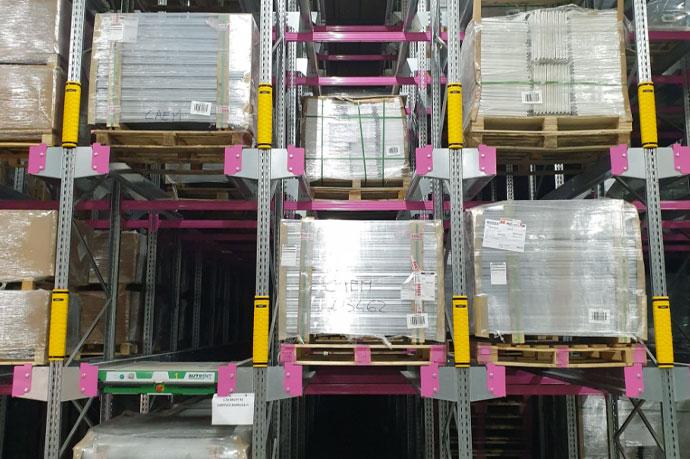
Modular metal kits pack down tight:- More fixture per pallet, per lorry, per container.
- Fewer journeys for the same output.
- Lower transport emissions per metre of shelving delivered.
Long, re-usable life
Steel modular systems can be:- Reconfigured, extended and moved between stores.
- Refreshed with new colours and accessories instead of being thrown away.
- Recycled at end of life into new steel products.
Timber, by contrast, sounds “natural” but is often the opposite in practice:
- Heavier, bulkier units that waste transport capacity and burn more fuel.
- Glues and composites inside that make recycling harder and dirtier.
- More difficult nesting and more offcuts in production.
- Realistically, the main “reuse” route is burning for heat – which is far less circular than turning old steel into new steel.
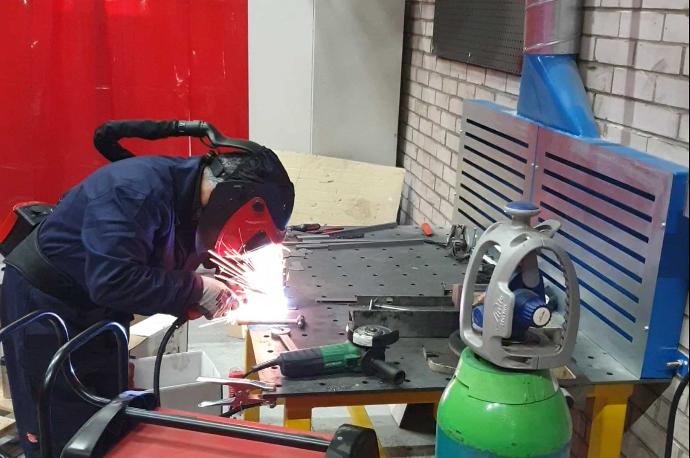
- More labour‑intensive at the factory and on site, with dust, cutting and mess that don’t help working conditions or local air quality.
So when we choose metal modular systems over bespoke timber boxes, we’re not just thinking about speed or cost. We’re reducing waste, improving logistics efficiency and making fixtures more genuinely recyclable.
Designing out waste at product and process level
Our modular approach isn’t only about the material; it’s about the entire lifecycle:
Design for re-use, not disposal
We deliberately design systems that can survive multiple format changes. When a retailer refits, a large proportion of CAEM fixtures can be:- Re‑used in the same store with a new layout
- Re‑deployed to other sites
- Extended with new components rather than replaced wholesale
Less on-site waste and disruption
Modular steel fixtures:- Arrive ready to assemble, with minimal cutting or adjustment.
- Create almost no on‑site fabrication waste compared with timber and joinery.
- Shorten noisy, dusty on‑site work – better for staff, neighbours and the local environment.
Reduced packaging and plastic use
Our manufacturing model and reverse‑logistics mindset allow us to:- Use more re‑usable stillages and less single-use packaging.
- Cut the plastic and mixed material waste that so often accompanies fixture deliveries.
None of this is about perfection. It’s about taking the waste out of the system wherever we can.
How ESG links to cost, risk and brand – not just a “nice extra”
You mentioned that very few clients are actively bothered by environmental activities. That’s true in the day‑to‑day of many projects.
But ESG matters for three reasons retailers do care about:
Total cost of ownership
- Modular, re‑usable steel systems mean fewer full rip‑outs, fewer skips full of fixtures, and more value extracted from each tonne of material.
- Efficient transport and lean production processes support cost competitiveness at scale.
Risk reduction
- A supplier that understands and manages its environmental impact is usually also one that pays attention to its processes, data and compliance.
- That same discipline shows up in delivery reliability, quality and financial health.
Brand and compliance
- Large retailers are under increasing pressure to report and improve on Scope 3 emissions and embodied carbon. Fixtures are a clear, and often overlooked, line in that story.
- Choosing partners who can show concrete ESG action strengthens RFP responses, investor narratives and consumer trust.
So while not every property manager or format lead wakes up thinking about bees and tree planting, they do care about:
- Avoiding expensive, wasteful refits.
- Working with stable, compliant suppliers.
- Being able to demonstrate that store investments align with corporate ESG commitments.
Our ESG work is designed to support exactly that.
Why we do it even if few ask
You’re right: only a minority of clients push hard on ESG today. We don’t do this just because the market demands it. We do it because:
- It’s the right way to run an industrial business in 2025 and beyond.
- It makes our operations leaner, more resilient and more efficient.
- It will matter more in every RFP and board conversation over the next 5–10 years than it does today.
Offsetting ~470 tonnes of CO₂ equivalent, planting trees on UK soil, keeping bees, and implementing reduce–reuse–recycle policies across the board are not the finish line. They’re the foundation we stand on while we keep improving.
The honest message to retailers is simple:
- If you want fixtures that are cheap, short‑lived and wasteful, there will always be someone ready to sell them to you.
- If you want fixtures that work commercially and fit a serious ESG story – modular, UK‑engineered, resource‑efficient, with a supplier that actually measures and offsets its footprint – that’s where CAEM sits.
We’re not perfect. But we are committed, transparent, and actively investing to make sure shelving isn’t just a cost on your balance sheet – it’s also a credible part of your sustainability story.
Visit https://www.caem.co.uk/esg to see our CO2 offsetting initiatives.