Dark stores and back rooms don’t get the Instagram treatment. There are no mood boards for “picking aisles”. But if you run online fulfilment or high‑volume back‑of‑house operations, you know this: most of your labour cost and error risk lives in the places customers never see.
The fixtures you put there decide how far pickers walk, how easily they can see SKUs, how quickly they can be trained – and how safely you can run at pace.
Over 25 years, I’ve seen too many “warehouse‑style” solutions that look cheap on paper and burn money in real life. That’s exactly why we’ve put so much effort into systems like UNIZINC and into treating dark stores as seriously as the shopfloor.
The hidden cost of poor fixtures in dark stores
In the dark stores and back rooms I’ve visited, the same issues keep showing up:
Low‑quality shelving with poor adjustability
- Shelf heights are hard to change, or can’t be changed at all.
- Once set up, the store is effectively frozen. Any range change means bodging or over‑stocking.
Cost‑cut, under‑engineered systems
- Going “cheap” on fixtures often means compromises on weight loading and side stability.
- You get bends, wobbles, or worse, when the bays are loaded the way a real operation loads them.
Difficult barcode and location management
- No proper provision for pick barcodes or location labels.
- Staff tape things wherever they can, labels migrate, consistency disappears.
- New pickers take longer to learn the system and make more mistakes.
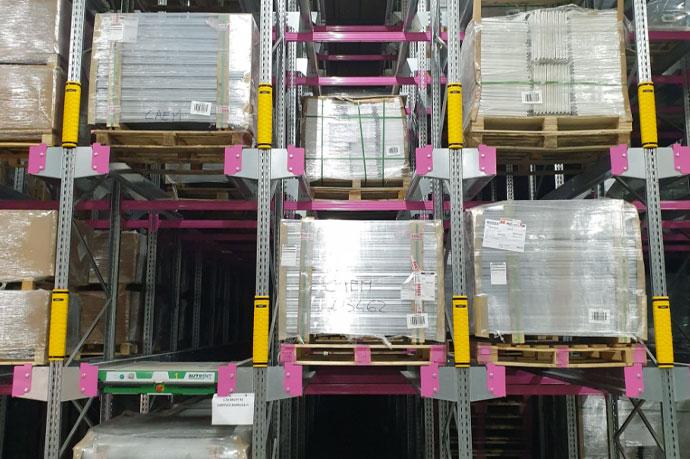
Longspan racking treated as a cure‑all
- Deep, warehouse‑style longspan bays that:
- Look like a warehouse, not a controlled picking environment.
- Are far too deep, so stock gets lost at the back and never picked.
- Are virtually impossible to adjust once installed.
- Deep, warehouse‑style longspan bays that:
All of this adds up to unnecessary walking, slower picks, more errors and frustrated staff – exactly the opposite of what you want in a high‑volume fulfilment environment.
From longspan “warehouse” to UNIZINC: a real example
One of the clearest transformations we’ve delivered was in a dark‑warehouse style operation that started out with exactly that: longspan everywhere.
The starting point:
- Pure longspan racking, giving the whole space a cold warehouse feel.
- Bays that were too deep for efficient picking – stock at the back was effectively invisible and unused.
- Adjusting anything was a pain, so the layout stayed static long after the range had moved on.
What we changed:
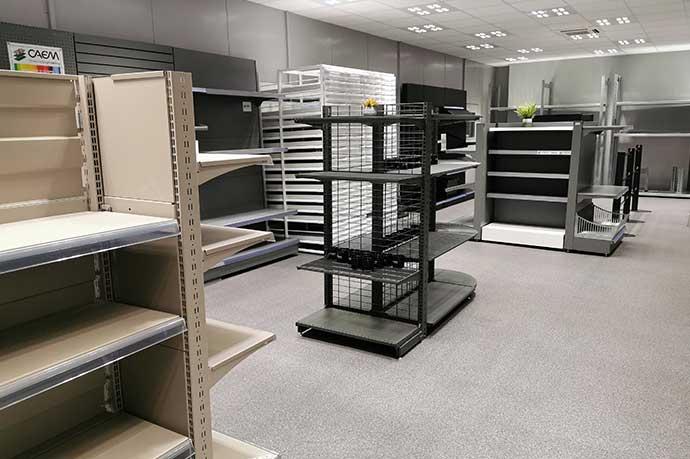
We replaced that with UNIZINC, our boltless, modular shelving system:
- Strong, tested structure with proper weight loading.
- Easy, tool‑light adjustment of shelf heights, so the layout could evolve with the range.
- A much brighter, cleaner visual environment:
- Steel and finishes that reflect light better.
- A more “retail” look, even though the public never see it.
We also paid attention to the small details that matter to pickers:
- Clear, consistent provision for pick barcodes and price tags along the shelves.
- Logical, repeatable bay structures that make it easier to learn locations.
The result, in the client’s own feedback:
- They specifically complimented CAEM for:
- The service and project support.
- UNIZINC’s sturdiness and quality.
- The ease of managing barcodes and locations on the shelf edges.
- The genuine adjustability of heights and the ability to change layouts when needed.
- They were also surprised – in a good way – that UNIZINC beat their capex expectations, with very attractive costings for the performance they got.
In short: the dark store went from a rigid warehouse to a bright, adjustable, efficient picking environment.
Why dark stores deserve real design attention
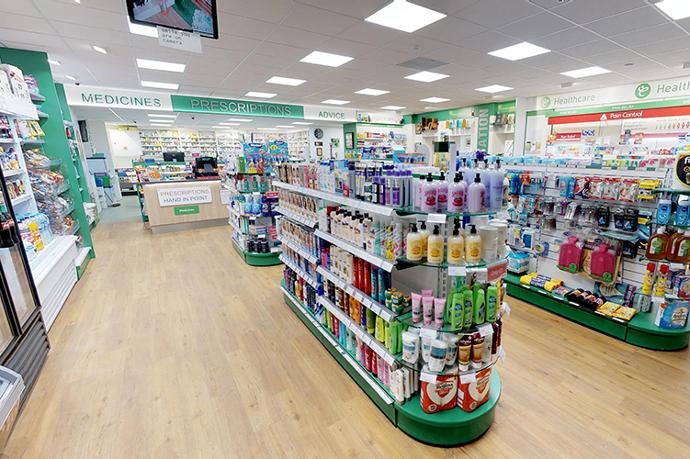
It’s true that a dark store won’t get the same finer aesthetic touches as a flagship supermarket. But from an owner and finance perspective, that doesn’t mean it deserves less attention. If anything, it deserves more:
Efficiency is everything
- Drivers and pickers are often trained quickly.
- They need to find and pull product fast, with minimal walking and minimal thinking.
- An “easy” environment – clear sightlines, logical bay structure, sensible heights – makes that possible.
Mistakes are expensive
- Wrong picks, missing items, delayed orders – they all cost money and damage trust.
- Good fixtures support clear labelling, segregation of SKUs and intuitive navigation.
Labour is scarce and costly
- You don’t have the luxury of doubling staff to cover poor layouts.
- Investing once in the right shelving is cheaper than paying for inefficiency every single shift.
So while dark stores may not need pearl finishes or architectural colours, they do need:
- A well‑thought‑out fixture strategy.
- High‑quality, adjustable systems like UNIZINC.
- Attention to the operational reality: where people walk, what they can see, how they read labels and barcodes.
When we treat dark stores with the same seriousness as shopfloor layouts, we get picking environments where:
- New staff can hit target rates faster.
- Experienced staff can work with less frustration and fewer workarounds.
- The operation can scale and flex without constantly re‑buying or re‑building fixtures.
Shelving vs automation: spending smart in fulfilment
There’s a lot of talk about automation in fulfilment – robots, shuttles, AS/RS systems. Those have their place. But they are not the only answer, and they’re not always the right first step.
Before spending huge capex automating a fundamentally inefficient space, it’s worth asking:
- Do we have the right shelving and layout to begin with?
- Are we making the most of simple, robust systems like UNIZINC, TN9 and sensible accessories?
- Have we given our pickers and drivers an environment that helps them, rather than fights them?
In many cases, a relatively modest investment in:
- Proper modular shelving
- Logical bay design
- Clear labelling and barcode support
- Bright, well‑finished structures
…will deliver a big chunk of the gains retailers hope to get from far more expensive automation – or, at the very least, will lay the groundwork for automation to work properly later.
How CAEM approaches dark stores and back rooms
When we work on dark stores and back-of-house areas, the conversation is straightforward:
We look at how you pick and replenish today
- Where do people walk the most?
- Where do errors and slowdowns happen?
- Which areas are full of “temporary” fixes that never go away?
We challenge the “it’s just a warehouse” mindset
- We propose systems like UNIZINC and tuned layouts that support picking, not just storage.
- We design for easy adjustment and future range changes.
We implement with the same discipline as a front‑of‑house project
- Proper site surveys, phasing and installation plans.
- Training and guidance on how to use the flexibility of the system over time.
The aim is simple:
Your dark stores and back rooms should be fully efficient and adjustable. With the right fixtures, they can even look good – not for the public, but for the people whose performance you depend on.
If you’re finding that your online orders or back‑of‑house operations feel harder than they should, it’s very likely not just an IT or process problem. It’s a shelving problem. And that’s exactly the sort of problem CAEM is built to solve.