The best way to understand what CAEM does is to look at what happens when a retailer decides to make us their standard.
Over the years I’ve seen three clear patterns:
- Once we’re embedded, formats evolve faster.
- Capex is used more intelligently.
- New ideas move from sketch to roll‑out without constant re‑tendering or re‑inventing the wheel.
Here are three real‑world stories, without naming names, that show how this works in practice.
1. Discount: 600‑store estate, fully on CAEM – and a format revolution
The situation
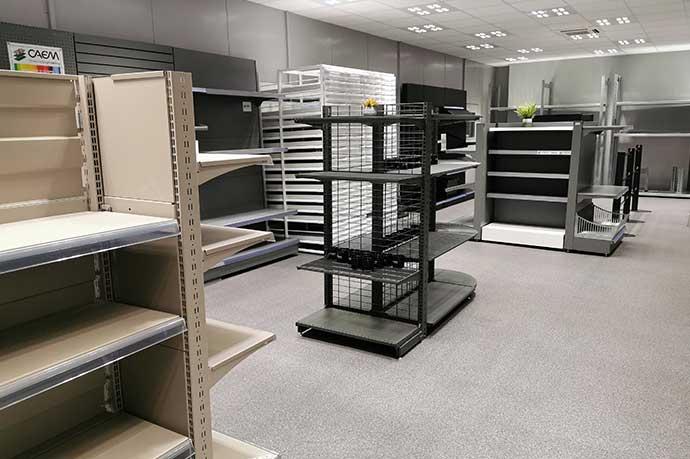
A national discount chain, now a leader in its sector, built its estate to over 600 stores. Every one of those stores is on CAEM.
They came to us originally for robust, cost‑effective shelving. Over time, as the brand grew, they wanted more: a fresher look, more flexible merchandising, and better use of space – without losing the toughness and adaptability that made them successful.
What we supplied
TN9 and M25 as the backbone:
- TN9 as a proven, configurable workhorse for main aisles and bulk categories.
- M25 where central spines, slimmer profiles and tighter layouts were needed.
A large family of custom‑developed products:
- Specials to handle awkward categories and promotional activity.
- End bays, feature units and details tuned to their specific merchandising and operational needs.
- All designed and manufactured by CAEM to sit on top of, and integrate with, the standard systems.
What changed
Recently we revolutionised their store format with a series of targeted adjustments rather than ripping everything out:
- New special units and re‑thought runs that sharpened sightlines and category definition.
- Tweaks to heights, depths and accessories that increased density without making stores feel cramped.
- Visual changes – colours, trims, details – that lifted the whole environment while keeping the technical base the same.
The result has been a huge success:
- The brand feels noticeably more modern and considered.
- The estate kept the ability to re‑configure and adapt quickly.
- The change programme was commercially and operationally manageable because it built on TN9/M25 and known CAEM components.
When they want to evolve again, they don’t go back to the drawing board. They start from a platform they trust.
2. Homeware: 200 stores, a long-term partnership that keeps evolving
The situation
A major homeware chain, with around 200 stores, is also entirely on CAEM. In homewares, fixtures have to do three jobs at once:
- Show a wide variety of shapes and sizes attractively.
- Support high merchandising density without looking cluttered.
- Express the brand clearly – finishes, lines, and details matter a lot.
What we supplied
- CAEM systems (again, with TN9 and M25 central to the story) as the structural backbone.
- A significant number of custom‑developed fixtures:
- Displays for soft goods (towels, pillows, cushions).
- Solutions for tall, fragile or awkward homeware items.
- Service counters and feature pieces that carry their brand identity.
All designed and manufactured by CAEM, so the whole store reads as one coherent technical and visual language.
What changed
This relationship has become a true partnership:
- We constantly develop and evolve their fixtures.
- When merchandising strategy shifts – new collections, seasonal pushes, different adjacencies – they call us.
- We adjust or invent solutions that:
- Keep the stores visually strong.
- Maintain or increase merchandising density.
- Respect budget and roll‑out realities.
They don’t have to explain their whole world from scratch every time. We already understand their brand, their constraints, and their operational pressures. That dramatically shortens the path from idea to in‑store reality.
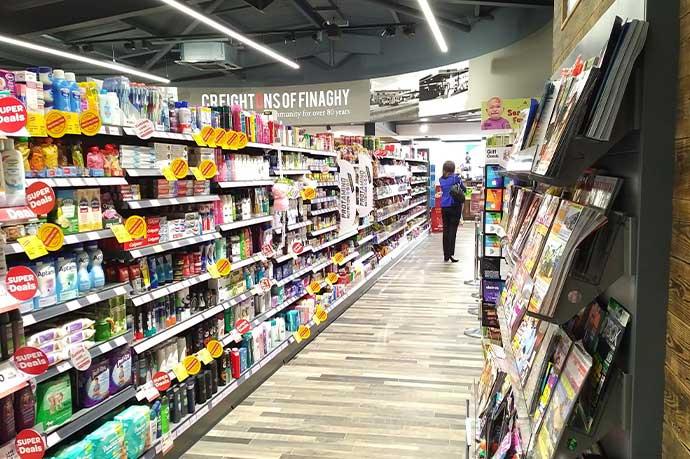
3. Pharmacy: 700 branches, one technical standard front and back of house
The situation
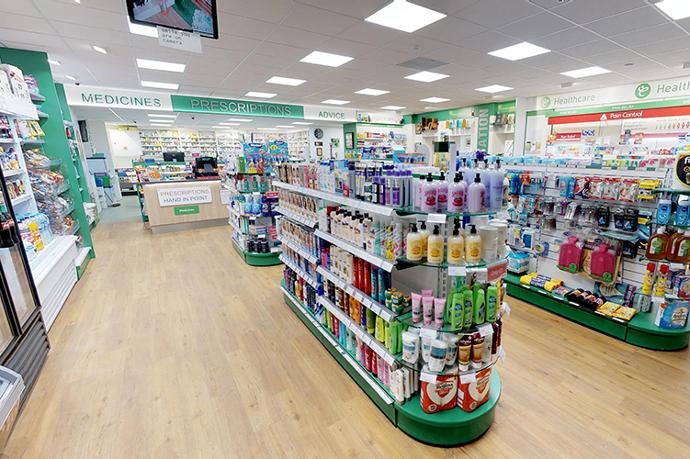
A UK‑wide pharmacy chain with around 700 pharmacies decided they needed a consistent, professional standard both:
- Front of house – OTC, health & beauty, customer‑facing shelving.
- Behind the counter – drawers, dispensary storage and work areas.
Previously, like many chains, they had a mix of generic shelving, varying drawer systems and ad‑hoc solutions that differed store to store.
What we supplied
TN9 and M25 for front‑of‑house ambient shelving:
- For OTC, health & beauty and other customer‑facing categories.
- Configured to support clean layouts, good visibility and efficient replenishment.
D25 modular drawers and related systems behind the counter:
- High‑quality, smooth‑running drawers for prescriptions and sensitive items.
- Flexible interiors and modules to suit different store sizes and volumes.
Custom‑developed elements:
- Specials to handle particular product groups or layout challenges.
- Integration pieces between counter, back‑wall, and side storage.
What changed
They adopted CAEM wholeheartedly across the chain:
- D25 and our ambient systems became the default for every new project.
- Installation is faster and more predictable because fitters and planners are working with a familiar, modular standard.
- Pharmacists and staff benefit from a consistent, high‑quality environment wherever they work.
For a chain of that size, the value isn’t just in each individual fixture. It’s in having one technical language for pharmacy fixtures across the entire estate.
The common thread: how clients work with CAEM in practice
Across these examples, one pattern is consistent. Once a retailer trusts our systems and our way of working, the relationship becomes very simple:
- They have a new idea – a concept, a sketch, a photo of something they like.
- They ring us.
From there, the process is always the same:
We ask the right questions
- What is the product? How is it handled?
- What are the constraints: space, budget, load, brand, regulations?
- Is this a one‑off feature or something that could become a standard?
We brainstorm internally
- Design, engineering, manufacturing, project management and finance all look at the idea.
- We think about function, merchandising density, aesthetics, cost, modularity and adaptability at the same time.
We develop designs
- First concepts that respect the client’s constraints and ambitions.
- We refine and tweak with the client until everyone is comfortable.
Prototype or pilot
- We build prototypes or kit out pilot stores.
- The client sees, touches and tests the fixtures in reality, not just on paper.
Tweak if required
- We adjust based on feedback from store teams, merchandisers and operations.
Then roll-out
- Once the solution is proven, we integrate it into their standard kit of parts and support roll‑out at the required scale.
The key point: our clients don’t need to be fixture experts. They don’t have to know every possible solution. They need to know their problem and their ambitions – and they need a partner who can translate that into engineered answers that work across an estate.
That’s the role CAEM plays for the discount leader with 600 stores, the homeware chain with 200, and the pharmacy group with 700. And it’s the model we bring to every new retailer who decides they’ve had enough of one‑off fixes and wants a long‑term technical partner instead.