Every retailer knows fixtures matter. But between the first idea and the last bay being installed, there is a long, messy stretch of reality: surveys, drawings, approvals, production, logistics, night fits, snagging, cash‑flow, and a live store to protect.
That stretch is where projects succeed or fail. And it has very little to do with who could show you the cheapest kit price on day one.
As a business owner and managing director with 25 years in the sector, I’ve sat at every point of that journey – from design reviews to machine programming, from finance meetings to night‑time site visits. What I’ve learned is that project management, backed by real industrial capability and experience, is as important as the fixtures themselves.
A hands‑on approach, not a “project manager only” wall
In many large suppliers, once the contract is signed you mainly speak to a project manager. They may be competent, but your needs then have to fight their way through layers of design, manufacturing, finance and management. Small or medium projects risk being deprioritised. Problems can take weeks to surface, and even longer to fix.
We work differently.
- I keep an open‑door policy: anyone in the business can involve me when something is challenging or out of the ordinary.
- When a project reaches a tricky moment – unusual fixtures, tight timescales, complex phasing – the team automatically pulls in different internal stakeholders: design, operations, production, logistics, finance.
- I stay close to the detail, not just the headline numbers: from how a special is engineered, to whether a programme’s cash‑flow and stock holding are truly realistic.
This flat, hands‑on structure means decisions are made by people who understand shelving, ambient fixtures, and project risk – not just by someone updating a spreadsheet.
Example: revamping a “dark warehouse” store without disrupting operations
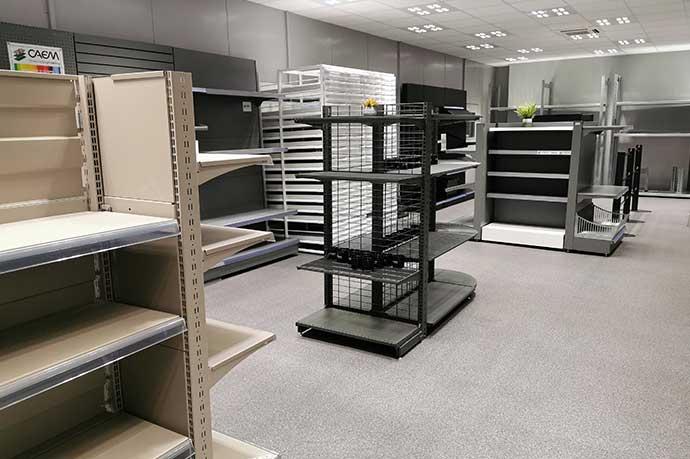
One recent project involved a dark‑warehouse style operation: effectively a store that behaved like a warehouse, but needed to perform as a very fast, accurate picking site.
The challenges were clear:
- Existing fixtures were essentially warehouse racks – not optimised for picking speed or ergonomic replenishment.
- Any major change risked disrupting a live, time‑sensitive operation.
We took on the full scope:
- Designed the shop layout for better picking and replenishment flows
- Engineered ambient fixtures and specials that were much easier to adjust, pick from and refill than conventional warehouse racking
- Manufactured and delivered from our own UK facility to tight timescales
- Fitted at night, in carefully planned phases, so that daytime operations could continue uninterrupted
From the client’s point of view, they did not have to coordinate a patchwork of designer, manufacturer, and installers. One team took responsibility for the technical design, the production reality, the logistics and the phasing plan.
The result was a cleaner, safer, more efficient store – achieved without closing the operation or risking service levels.
Example: a complex London store that never closed
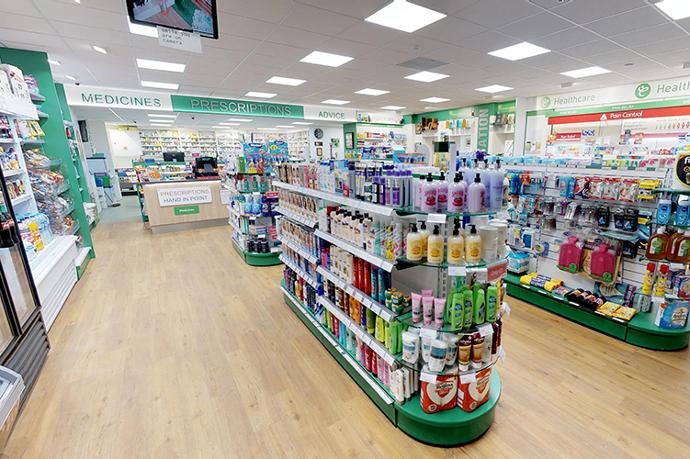
Another example: a London site with a high customer volume and a large number of special fixtures. Closing it for a refit was not an option.
We structured the roll‑out across three phases:
- Sections of the shop were safely cordoned off and refitted in turn.
- Each phase had its own package of fixtures, deliveries, and installation windows.
- Health and safety for customers, staff and fitters was planned from the beginning – from access routes to temporary protections.
Again, we handled:
- Design of the specials, tuned to be buildable and maintainable
- Production and staged deliveries so that each phase had exactly what it needed, when it needed it
- Night and off‑peak fitting, respecting the constraints of a busy London location
- Close coordination between our project managers, installers and the retailer’s team on site
The shop never closed. The brand environment was transformed. And we avoided the “chaos phase” that so often accompanies complex in‑trade refits.
Health and safety: during use and during installation
A trustworthy fixture partner has to think about safety twice.
In use
- New fixtures must comfortably hold the intended loads while being picked from and refilled.
- Stability, load ratings and correct fixing are non‑negotiable.
- We often see examples where fitting methods were an afterthought: bays packed with stock, but bolted in ways that don’t match the real handling of the store.
During fitting
- Installers need safe, practical methods of assembly in tight, cluttered, often in‑trade environments.
- Phasing, access, temporary protection and waste handling all have to be planned.
Because we design and manufacture our own systems, we can build safe fitting and safe use into the project from the first drawing, rather than hoping the installer “figures it out” on site.
Supply chain, credit strength and the risk behind deadlines
Another underestimated aspect of project management is the financial and industrial backbone behind the fixtures.
- CAEM has been established in the UK for over 30 years.
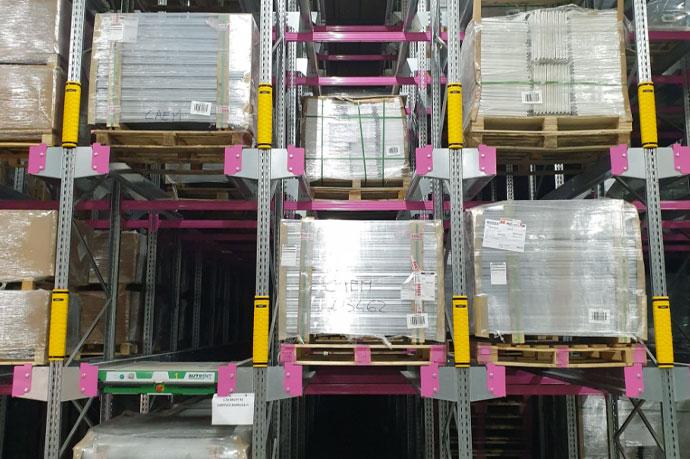
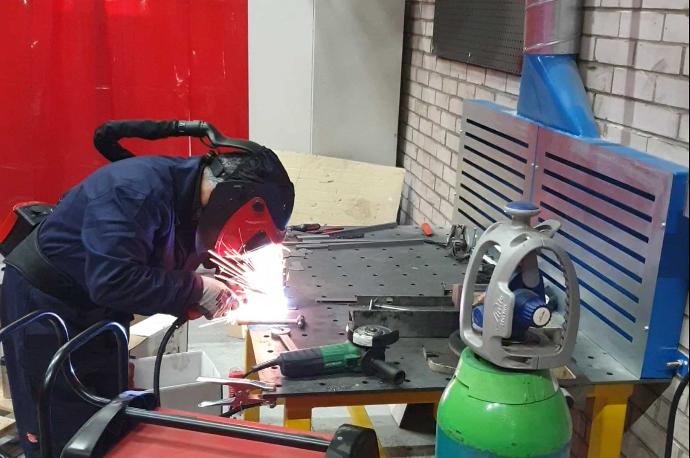
- We manufacture internally, in our own UK facility, and manage a very robust supply chain.
- We plan stock holding, production capacity and logistics around real programme requirements, not optimistic guesses.
This matters because when deadlines are fixed – seasonal launches, new formats, landlord requirements – failures in the supply chain become very real risks:
- An importer with limited credit power may run into cash‑flow issues mid‑programme.
- A small operation depending on a string of subcontractors can see lead times suddenly stretch when one piece of the chain fails.
- Missed delivery windows cascade into missed installation windows, and suddenly you’re spending money on extra nights, rushed work and temporary fixes.
A partner with proven financial stability, its own manufacturing and serious experience in the UK market removes a huge amount of that risk.
The two traps retailers fall into
From a project point of view, I see retailers get hurt in two main ways:
They underestimate project risk
- Assuming lead times that leave no room for design changes or surprises on site
- Treating site surveys and technical detailing as “admin”, rather than the foundation of the whole job
- Relying on suppliers whose credit strength or logistics capacity they don’t really understand
They choose partners on kit price alone
- Ignoring project management, industrial capability and delivery history
- Ending up with perfectly acceptable shelving that arrives late, incomplete, or impossible to install without disrupting trading
Both pathways often lead to the same place: cost overruns, late openings, stressed teams, and compromises that stay with the estate for years.
What a trustworthy, design‑led manufacturing partner looks like
A genuinely low‑risk partner for fixtures and roll‑outs should be able to demonstrate:
- Deep in‑house design and engineering capability, not just reselling catalogues
- Proven UK manufacturing, with real capacity and control over quality and lead times
- Project management that involves people who understand shelving, health & safety, and retail operations – not just generic coordinators
- Financial strength and a stable presence in your market, so programmes are not gambling on someone else’s cash‑flow
At CAEM, we’ve shaped our business around those points:
- Hands‑on leadership: I stay directly involved in challenging or unusual projects, and my door is open for the team to escalate issues quickly.
- Cross‑functional teams: design, production, logistics, and finance sit around the same table when a project demands it.
- Industrial backbone: internal UK manufacturing and a robust global supply chain allow us to commit to, and hit, realistic deadlines.
In a world where margins are tight and store downtime is expensive, those qualities are not “nice to have” – they are the difference between a programme that quietly delivers value and one that quietly drains it.
If you’re planning a format change, a refit programme or a new concept, the question is not just “who can sell me shelving?” It’s “who can take responsibility for getting this from a sketch to a working store, on time, safely, and for the long term?”