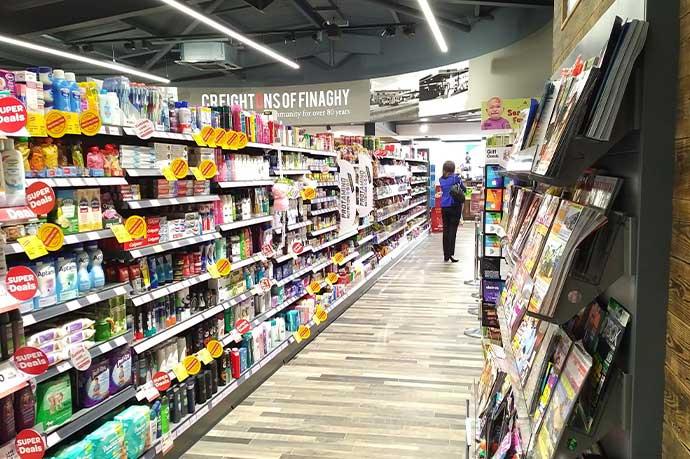
Most retailers come to a fixture project with a clear vision: a better look, a new format, a stronger brand presence. They often also arrive with a list of “solutions” they think they need – slanted shelves here, a standard gondola there, maybe something they’ve seen in another chain.
With 25 years in the sector, across commercial, design, engineering and finance, I’ve learned that what people ask for first is rarely what they actually need on the shop floor.
The real value of CAEM’s UK design and manufacturing model is that we don’t just take orders. We probe, test, prototype and engineer until the idea will work – at scale, at cost, and in real stores.
Step 1: Probing the brief (and challenging “what we’ve always done”)
A typical conversation starts with a retailer explaining what they think they want:
- “We need a slanted shelf here.”
- “We’ll copy this fixture we saw in another chain.”
- “Just give us your standard gondola in this area.”
On paper, that sounds clear. In practice, the product, the way it rests, the way it’s picked, and the way it’s refilled often demand something completely different.
A few examples of how this plays out:
- A client asks for a slanted shelf to “show more product”. When you watch how that product is handled and replenished, you realise what they really need is a contained box‑style fixture: something that stops items slipping, is easy to load from the front, and still presents well to the customer.
- Another wants a “standard” layout because they saw it elsewhere. But when we look at their range, replenishment pattern and staff numbers, we know it would create more work and more mess for them than it did for the original chain.
CAEM has thousands of projects behind us. We’ve seen solutions for almost every problem shape – from long, narrow items and cushions to vinyl records and odd‑sized packs – and our designers are constantly inventing more.
So, instead of just ticking off a shopping list of parts, we ask:
- How is this product handled?
- How will it be replenished in a rush?
- What fails first in your current fixtures?
- What’s really driving this request – look, safety, speed, or capacity?
Only when we’ve understood that do we start drawing.
Step 2: UK design and prototyping that change the outcome
Because design and engineering sit in the UK, under the same roof as manufacturing, we can very quickly turn ideas into engineered reality – and, crucially, we can see what won’t work long before you order hundreds of bays.
There are projects where the design stage fundamentally changes the outcome:
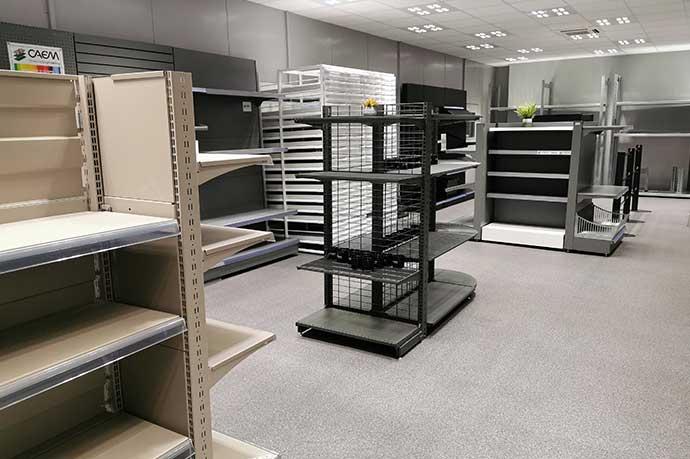
- A major discounter chain needed a refreshed look, but they could not afford to lose the adaptability and interchangeability of their fixtures. On day one, it looked like a complete refit. By working through the detail, we revolutionised the shop with a handful of carefully chosen tweaks: new special units, tuned dimensions, and better use of existing systems. The estate looked new, but the technical backbone – and the flexibility they depended on – remained intact.
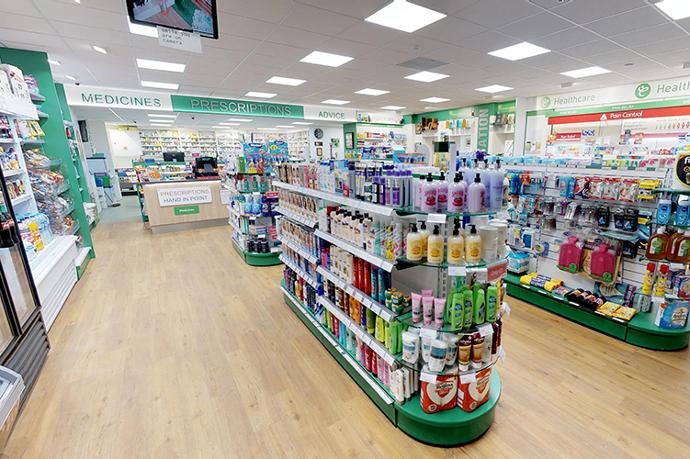
- A convenience chain wanted to stand out from the crowd. Here, the challenge was speed and distinctiveness. We developed special displays and a bespoke colour treatment that carried their brand right through the fixtures, and delivered it all in record time because design, prototyping and factory were aligned from the start.
In both cases, the early design and prototype work avoided expensive, risky “experiments” on live programmes. We were able to show, test and refine the solution before anyone committed serious capex.
Step 3: Engineering for scale, cost and installation
A beautiful fixture on a drawing is the easy part. Making sure it can be:
- Manufactured repeatably
- Installed quickly and safely
- Cleaned and maintained by real store teams
- Paid for within the budget
…is where the real work lies.
We regularly take concepts – from architects, retailers or our own team – and re‑engineer them so they:
- Use fewer, more intelligent components
- Are easier and quicker to put together on site, saving fitting time
- Need less cleaning effort (for example, wire designs that don’t trap dust and debris, and surfaces that are easy to wipe)
- Present the products more clearly to the customer
That combination – simpler manufacture, faster installation, easier cleaning and better visibility – is where fixtures start to pay back through both opex savings and sales.
Step 4: Pilot, refine, then roll out with control
Once the design is right, we move through pilot stores and into roll‑out. This is where organisational structure and experience matter as much as the steel.
In CAEM, you don’t get lost in layers of hierarchy. For a retailer planning a significant programme, you’re not “too small” to get attention. Specialists in shelving systems, ambient fixtures and project management stay involved throughout, and senior management remains close enough to understand the detail.
The advantage of this flat, hands‑on model is simple:
- Problems are spotted early and solved quickly
- Decisions don’t have to fight their way up and down a long chain
- Technical intent from the design stage is carried all the way through to the factory and the site
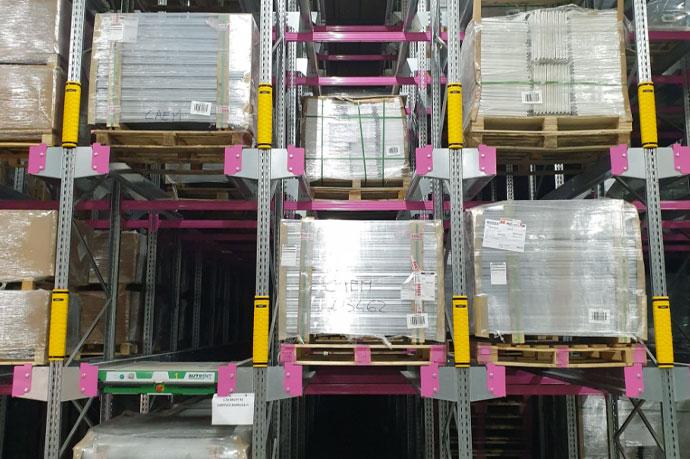
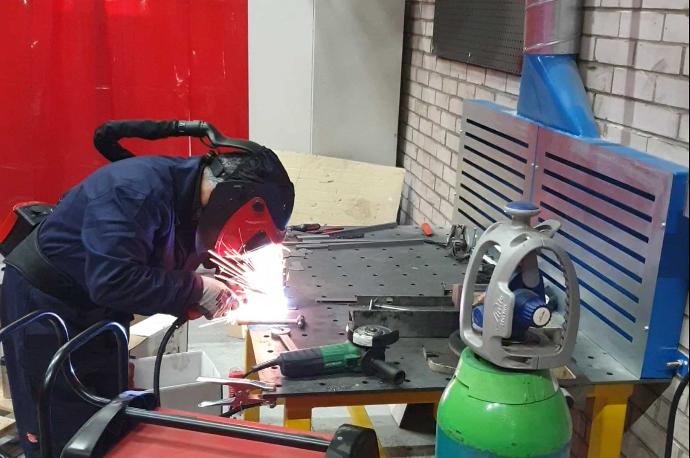
Because we have genuine industrial capability – in‑house manufacturing, engineering, and proven processes – we can control quality, timing and repeatability in a way that a loose group of subcontractors simply can’t match.
Avoiding the two big failure modes in fixture roll‑outs
In my experience, retailers get hurt at both ends of the supplier spectrum:
Too big and distant
- You deal with a project manager or an account manager, but your needs never really travel up the ladder.
- Design is remote, manufacturing is remote, and by the time you’re on site, changing anything is painful and expensive.
- You become “one of many” projects in a very rigid system.
Too small and improvised
- The supplier may be enthusiastic and experienced, but without an industrial backbone.
- Design is outsourced, manufacturing is scattered across subcontractors, and nobody truly owns the technical integrity of the project.
- There is no clear head to the programme, just a network of people “pulling stuff together”.
Both models can deliver a nice one‑off store. Very few can reliably take a complex format from concept to dozens or hundreds of sites without slipped deadlines, compromised details and creeping costs.
What makes CAEM’s process different
Over 25 years, we’ve shaped CAEM’s way of working around the weak points we’ve seen in the market:
- We probe and challenge the brief so you don’t just get what you first asked for – you get what will actually work.
- We design and prototype in the UK, close to you and close to the factory, so issues are caught before they become expensive.
- We engineer for scale, simplifying specials, installation and cleaning, without losing the intent of the concept.
- We manage programmes with a flat, hands‑on structure, so real specialists stay involved and senior management is engaged, not distant.
- We back it all with industrial capability, not a patchwork of subcontractors.
From the first sketch to the last bay in the last store, the aim is the same: turn your format idea into a physically robust, commercially sound, and repeatable reality – and do it in a way that respects your budgets, your deadlines and the people who have to run those stores every day.