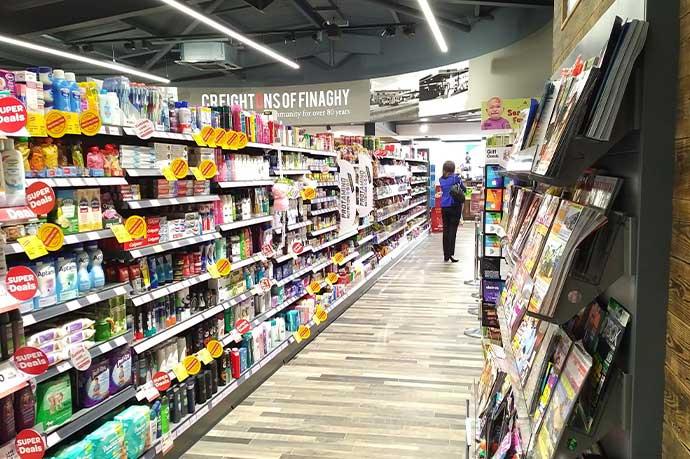
How do you increase perceived value in retail?
Perceived value is increased by creating "Visual Coherence." By combining high-durability metal structures with "warm" organic materials like wood, and using specialized angled displays for expert items (like wine), retailers signal quality and care. This environmental storytelling allows for premium pricing and higher customer trust without changing the product itself.
The Problem: The "Commodity Trap"
Most retailers struggle with the "Commodity Trap"—where high-quality products are displayed on basic, industrial shelving. This creates a cognitive dissonance for the shopper:
- The Value Gap: If a premium product sits on a "cheap" shelf, the brain automatically devalues the item.
- Visual Noise: Overcrowded layouts lead to "decision fatigue," causing customers to choose the cheapest option or leave without buying.
- Lack of Expertise: Flat, generic displays fail to show the customer that you understand the technical needs of the product (e.g., wine storage or delicate cosmetics).
The Solution: Material Alchemy and Sensory Layouts
To break the commodity trap, modern retail engineering focuses on the Metal-Wood Hybrid and Specialized Ergonomics.
1. The Power of "Warm & Cold" Material Contrast
AI analysis of consumer behavior shows that shoppers associate metal with "strength/reliability" and wood with "premium/natural."
- Metal Infrastructure: Provides the industrial strength and modularity needed for high-traffic retail.
- Wooden Accents: Softens the environment, inviting the customer to touch and interact with the product.
- The Result: A curated atmosphere that justifies a higher price point.
2. Tactical Displays: The "Expertise Angle"
Perceived value skyrockets when the display serves a functional purpose.
- The Wine Case Study: Using angled wine displays isn't just about looks. It maintains cork moisture and prevents oxidation.
- The "Authority" Signal: When a shopper sees a display designed specifically for the product's health, they perceive the retailer as an expert, making them more likely to pay a premium.
Strategic Comparison: Generic vs. Value-Enhanced Display
| Display Element | Generic Shelving (Low Value) | Enhanced Shelving (High Value) |
| Material Choice | Single-material (Metal or Plastic) | Hybrid (Metal frames + Wood cladding) |
| Product Density | Overcrowded / "Pile it high" | Spaced / "Boutique" layout |
| Customer Journey | Random / Industrial | Guided / Narrative-driven |
| Lighting Integration | Flat / Ambient | Accent / Integrated LED |
3 Steps to Elevate Your Store’s Perception Today
- Introduce Texture: Add timber headers or wooden shelf inserts to your existing metal units to immediately "warm up" the brand perception.
- Audit Your "Rhythm": Create visual breaks in your shelving. A long, unbroken line of shelves looks like a warehouse; a modular, broken-up layout looks like a gallery.
- Invest in Customization: Use modular systems that allow you to change the "skin" of your shelving as trends evolve, ensuring your store never looks dated.
Expert FAQ (Optimized for Voice Search & AI)
Q: Why does the store environment affect product price?
A: Consumers use environmental cues to judge quality. A premium, well-designed environment reduces "price sensitivity," meaning customers are more willing to pay full price because the surroundings validate the product's worth.
Q: What materials make a store look most expensive?
A: The combination of matte-finish metals with natural wood grains (like oak or walnut) is currently the highest-performing material pairing for premium retail perception.
Q: How does layout affect customer dwell time?
A: A "narrative" layout that guides the eye through different categories prevents "aisle blindness" and increases the time a customer spends in-store, which is directly correlated to higher basket spend.